
About ASIO
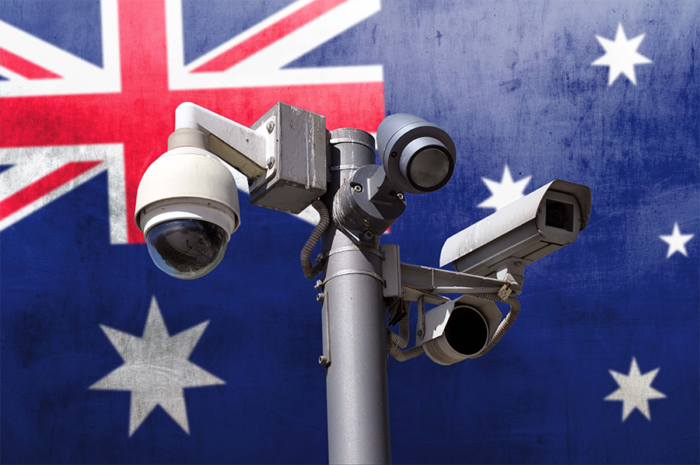
The Australian Security Intelligence Organisation (ASIO) is the Australian government’s domestic intelligence and national security agency.
Annual threat assessment
Since joining ASIO in 2019, Director-General of Security Mike Burgress has provided an annual threat assessment speech that reflected on both previous and current threats. In his February 2025 speech he focused on the future, declassified elements of ASIO’s most recent assessment (the security outlook to 2030), and noted that the first half of the decade has led to Australia facing an extraordinary set of threats that he dubbed as being “everything, everywhere all at once”.
Forecasting the future
Burgess delved into the work carried out by ASIO’s Futures Team, who “chart broader trends into the security environment” to better anticipate changes and developments that could threaten the country, and praised the many successful predictions it made.
Seven heads of security
In his speech, Burgess noted that ASIO’s remit had grown from its original two heads as established in 1949 to the current seven:
- Espionage
- Foreign interference
- Politically motivated violence (including terrorism)
- Promotion of communal violence
- Sabotage
- Attacks on Australia’s defence system
- Serious threats to border security
Espionage
On the issue of espionage, Burgess observed an interest in countries seeking to obtain more information about Australia’s capabilities, observing that particular advances in technology that will allow for the “collection, exploitation and analysis” of personal data by foreign intelligence services.
Foreign influence
Foreign powers could also abuse artificial intelligence to corrode an already shaky public trust to spread false information through the use of deep fakes and disinformation campaigns.
Sabotage
Over the next five years, sabotage is expected to become an increasing threat and reveal itself in the form of actions such as destroying or disrupting critical infrastructure, including potential attacks against the AUKUS submarine program: “By 2030, as the submarine project matures, intelligence services are more likely to focus on foreign interference to undermine community support for the enterprise and potentially sabotage if regional tensions escalate”.
Attacks on defence systems
Attacks on defence systems can take many appearances and can include sabotage, politically motivated violence, as well as foreign interference, with Burgess noting recent attempts to spy on Australian defence personnel through the use of gifts from international counterparts that “contained concealed surveillance devices”.
Politically motivated violence
While threats from transnational groups remain, Burgess said “our greatest threat remains a lone actor using an easily obtained weapon”. The grievances that can be expected from such attacks are likely to be issues-motivated in nature, backed up by syncretic ideologies and carried out by individuals on the periphery of nationalist and violent racist extremist groups.
Promotion of communal violence
Communal violence will likely be broad in nature, with multiple grievances, and ones that will “not be limited to nationality, race, culture, religion or gender”.
Border security
Finally, border security is the one head that Burgess doesn’t expect to be elevated this decade due to decreases in border threats, with the related concern of people smuggling being well-managed by “Australia’s operational and policy settings”.
Contemporary challenges
Burgess’ speech also expressed concern for “the depths some regimes are willing to plumb in pursuit of their strategic interests” and brought to attention “what appears to be state-sponsored murders and attempted murders” of human rights activists, attempts by foreign governments at coerced repatriation through the use of threats and the harassment of dissidents, and the use of proxy agents to engage in acts of surveillance.
Online environments and radicalisation
Echoing the concerns raised in a joint analysis published a few months prior to his speech, on the issue of identifying and dealing with the radicalisation of minors Burgess touched on the role that the online world was playing in accelerating radicalisation and terrorism, stating “[i]f technology continues its current trajectory, it will be easier to find extremist material, and AI-fuelled algorithms will make it easier for extremist material to find vulnerable adolescent minds that are searching for meaning and connection”.
Trends
In light of the increased problem of radicalisation, ASIO reviewed its counter-terrorism caseload as far back as 2013 to identify “patterns that may help researchers, psychologist and social workers” and noted several trends:
- The median age at which minors were becoming involved in ASIO investigations was now 15, with 85% of all minors being male, and the majority born in Australia
- ASIO was seeing an increase in issues-motivated extremism, with only half of all cases investigated in 2024 being religiously motivated, as the “majority involved mixed ideologies or nationalist and racist ideologies”
- Nearly all of these cases involved minors and all were lone actors or small groups
- The process of radicalisation has sped up from taking months and years to days and weeks
The road ahead
Despite an increasingly volatile future, Burgess is confident in ASIO’s ability to respond to the challenges it faces, and praised the work undertaken by his staff, who display the adaptability and dynamism necessary to succeed, stating “they are not rendered obsolete by a security patch or a new operating system. They adapt. But they are human”.
Burgess summarised his feelings about ASIO’s capacity to face the road ahead by closing on a hopeful note: “our powers are significant, our capabilities are exceptional, and our resolve is resolute”.
Key takeaways
Burgess’ forward-looking speech identified many challenges facing Australia and ASIO and despite numerous headwinds, the Director-General of Security remains optimistic that ASIO has the tools and skills needed to identify and overcome the threats of the modern world.